
Create a Story
Stories provide a slide-based approach to data visualization, allowing you to present multiple views of your data sequentially. Use stories to guide viewers through a specific narrative with visualizations and static widgets.
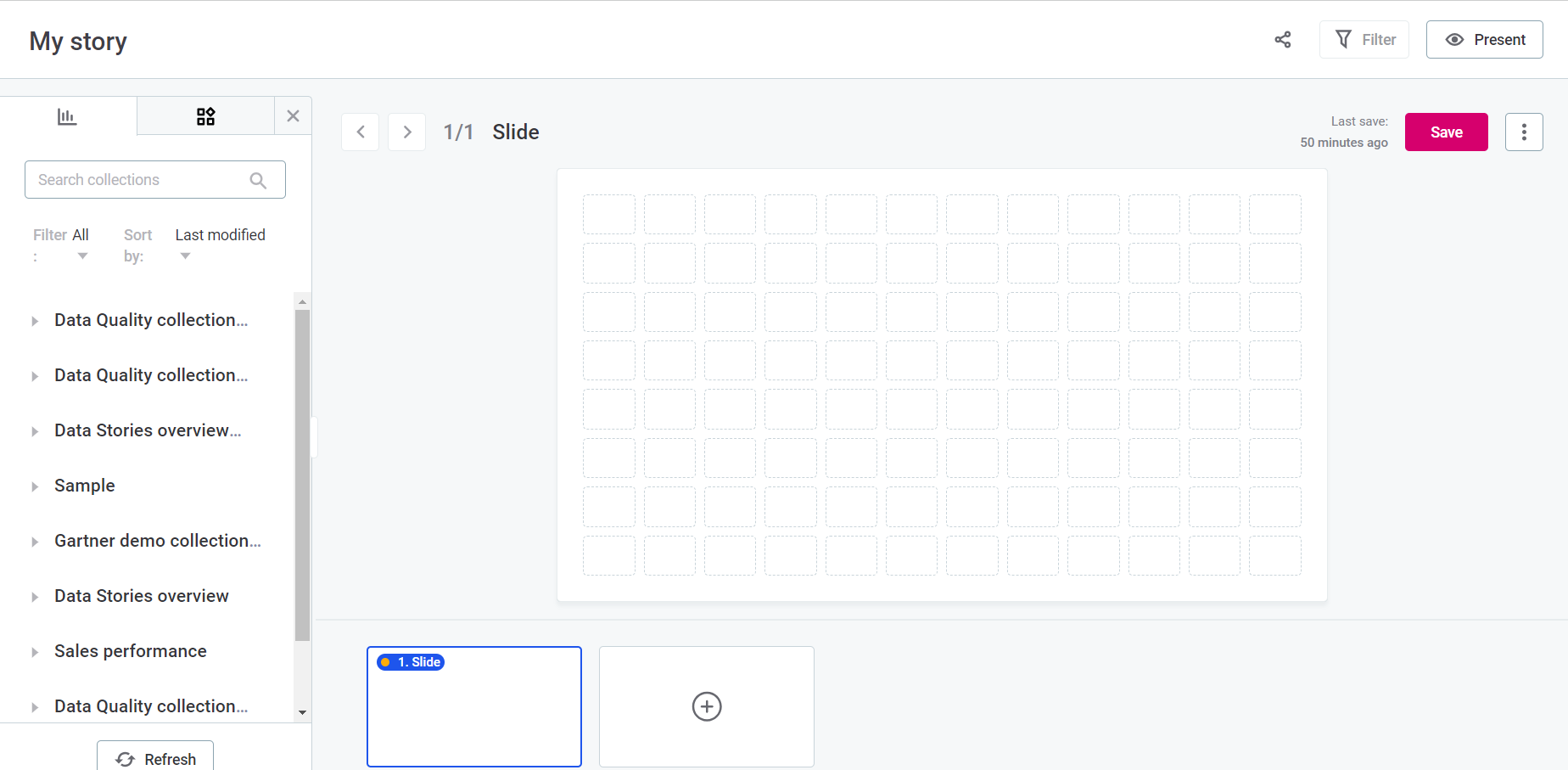
Each slide has its own 8 x 12 grid canvas.
Create a story
-
Go to ONE Reports > Stories and select Create.
This opens a new story with a single empty slide and a resizable left-side menu with two tabs: Collections and Widgets.
-
Rename your story by double-clicking the default title (My story) and entering your preferred name.
|
To open an existing story, select the relevant card on the ONE Reports home page or the Reports screen. To duplicate an existing story:
|
Add and manage slides
-
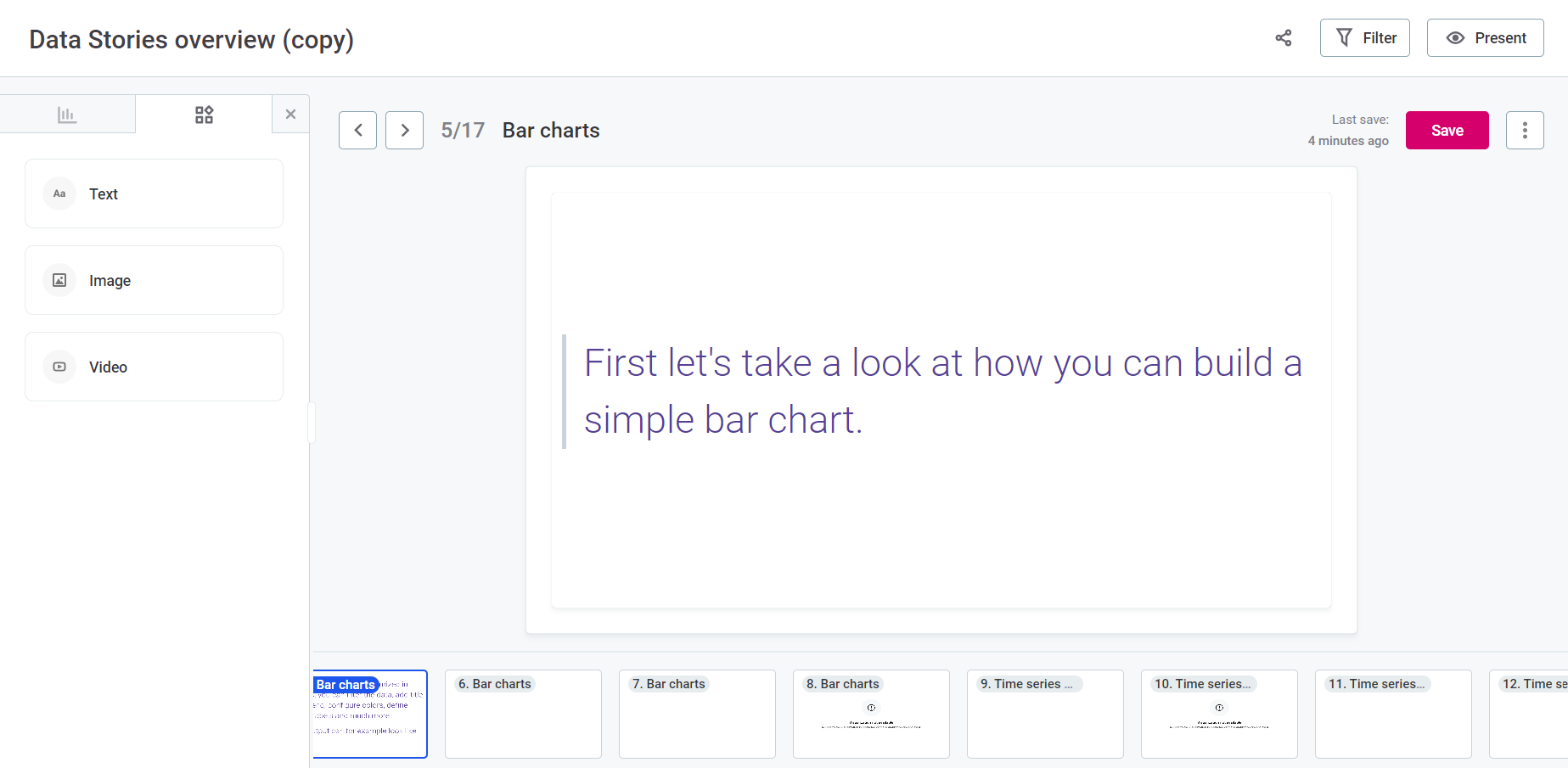
Select the three dots menu of the current slide (in the slide sequence or on the canvas) and select Add slide.
-
From the three dots menu, you can also duplicate, rename, or delete the slide.
| Slides can also be renamed by double-clicking their title. |
Transitions
By default, slides transition vertically. To make a slide transition horizontally:
-
Open the three dots menu of the slide.
-
Select Slide-in horizontally.
A slide with a horizontal transition displays an arrow on its left side in the builder.
To remove the transition, select Remove transition to side from the three dots menu.
Add visualizations
You can add multiple visualizations to your story from different collections. For maximum impact, place the most important widgets at the top or in the center.
| ONE Reports leverages data protection classification that prevents unauthorized access to protected data, as signaled by visual indicators (lock icons) and notifications. For more information, see Data Protection in ONE Reports. |
-
On the Collections tab, select the collection where your visualizations are stored.
-
Drag and drop visualizations from the dropdown list to the slide grid.
-
Resize or rearrange visualizations by dragging the corners or the entire widget within the grid.
To learn more about visualizations, see Manage Visualizations and Collections. |
Add static widgets
Use static widgets such as video, image, or text elements to enrich your story.
-
Select the Widgets tab in the left-side menu.
-
Drag and drop the relevant widget to your slide.
-
Customize the widget properties as needed.
|
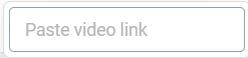
Image widgets
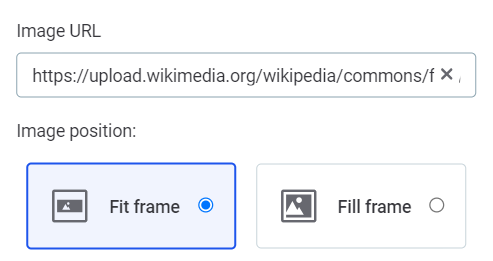
Provide the Image URL and adjust the display using Fill content or Fit content in Image position.
Text widgets
Select the widget to access formatting and customization tools.
| Hover over any button in the toolbar to view helpful tooltips. |
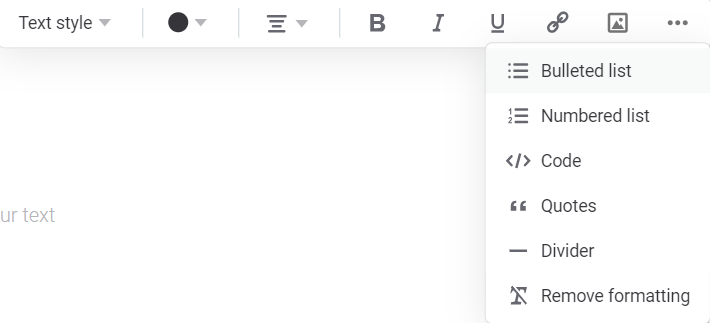
Available options include:
-
Text style: Title, Headline, Paragraph, or Small text.
-
Text color: Choose from the color grid.
-
Text alignment: Left, right, center, or justified.
-
Rich text options: Bold, italic, or underline formatting.
-
Hyperlink: Highlight text and paste a URL.
-
Image URL: Embed images within text.
-
Additional options (…): List style, code blocks, quotes, dividers, and remove formatting.
-
Undo/Redo: Reverse or restore actions.
Apply global filters
Global filters control the data displayed across all slides in your story.
| To define filters that apply only to a specific visualization, see Filter Visualization Data. |
Select data source and attributes
-
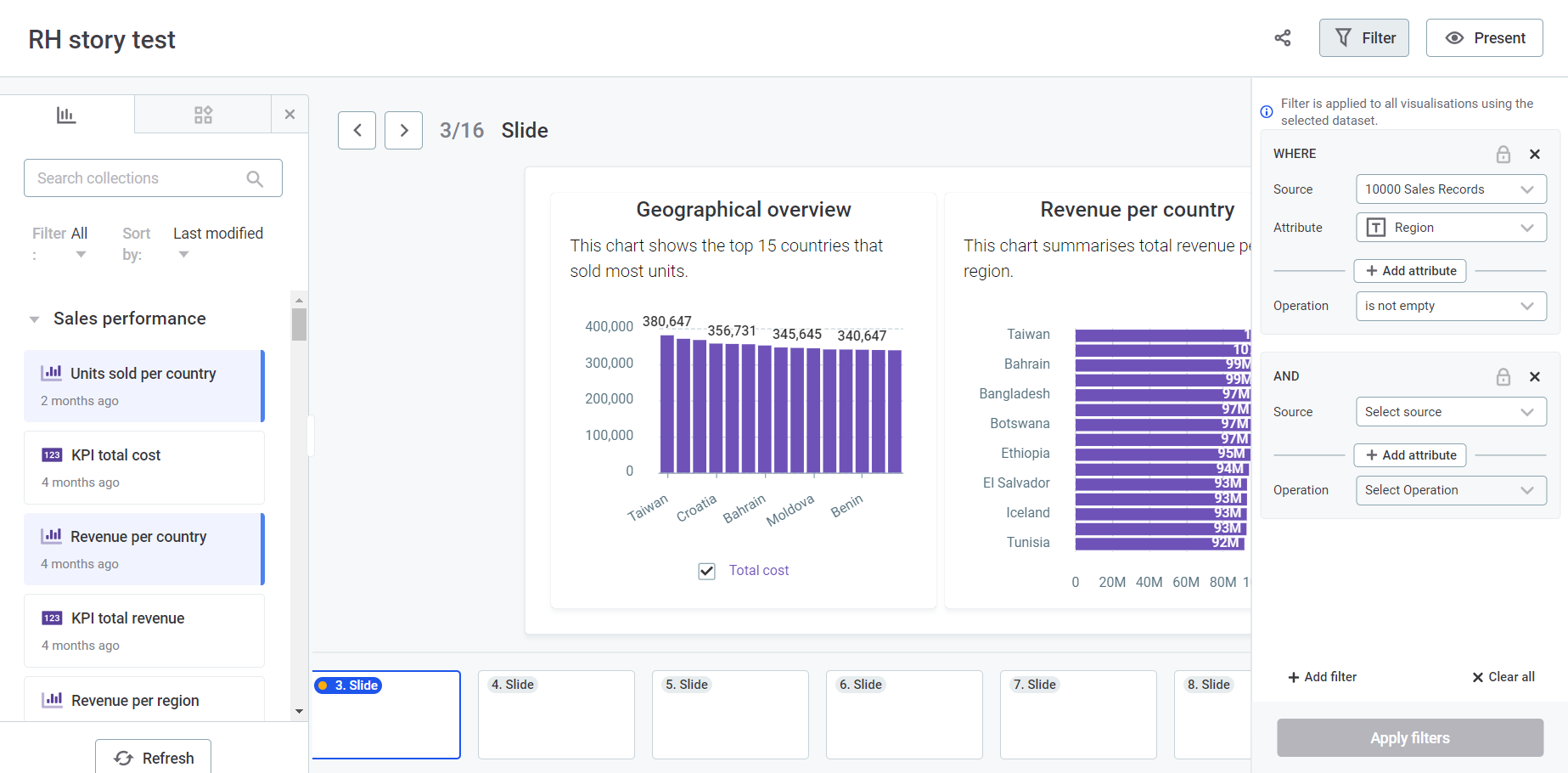
Select Filter in the upper-right corner of the screen.
-
In Source, choose a dataset from the available datasets in your story.
-
In Attribute, choose an attribute from the list. Recommended attributes are displayed first.
Specify the operation
In Operation, select an operation based on the data type of the chosen attribute.
-
Numeric
-
Text
-
Date
-
>, <, >=, ⇐: Greater than, less than, or equal comparisons.
-
=, ≠: Equal or not equal to a value.
-
is empty, is not empty: Filter by NULL or non-NULL values.
-
in range, not in range: Filter by a numerical range.
-
equal to, not equal to: Match or exclude specific text.
-
contains, does not contain: Match partial text (supports wildcards with
%). -
is empty, is not empty: Filter by NULL or non-NULL values.
-
equal to, not equal to: Match or exclude specific dates.
-
in range, not in range: Filter by a date range.
-
before, after: Filter by dates before or after a specific date.
-
is empty, is not empty: Filter by NULL or non-NULL values.
-
in last: Filter by the last N days, weeks, months, quarters, or years.
-
in current: Filter by the current day, week, month, or year.
Enter values and apply
-
Enter the filter values based on the operation type.
-
Select Apply filters to update the story.
-
To add more filters, select Add filter and repeat the steps.
-
To remove all filters, select Clear all.
|
For each filter, you can:
|
View your story
Select Present in the upper-right corner to switch to a read-only view with a left-side navigation menu, ideal for presentations or personal review.
| When you select Present, you enter View mode. |
Save your story
Select Save to save updates for the current slide.
| Each slide must be saved independently. Saving one slide does not automatically save others. |
| The last saved timestamp is shown to the left of the Save option. |
Share your story
After saving, you can share your story with others.
| Other users can only view your story if: |
-
You explicitly share it with them.
-
They have permissions to the collection storing the visualizations.
-
They have the appropriate access level to the underlying catalog items or data quality results.
To share a story:
-
Select Share.
-
Find and select the Users or Groups to share with.
-
Set the access level (Edit or View) for each user.
-
Optionally, select Copy Link to copy the story URL.
-
Select Done.
Was this page useful?